English Listening Practice: 7 Easy Ways to Understand Native Speakers
Understanding native English speakers is a goal for almost every learner. Whether you want to follow a Hollywood film, a YouTube video, a job interview or an IELTS listening test, strong listening skills make everything easier.
You don't need expensive courses to improve. With the right daily habits, you can train your ear at home. In this guide, you will learn 7 easy ways to practise English listening, how to choose the right level and a simple weekly plan.
Why Listening Practice Matters
Listening is the foundation of speaking. Children learn to understand language long before they speak it. The more English you hear and understand, the more naturally you will speak. Good listening also helps with pronunciation, vocabulary and confidence in conversations.
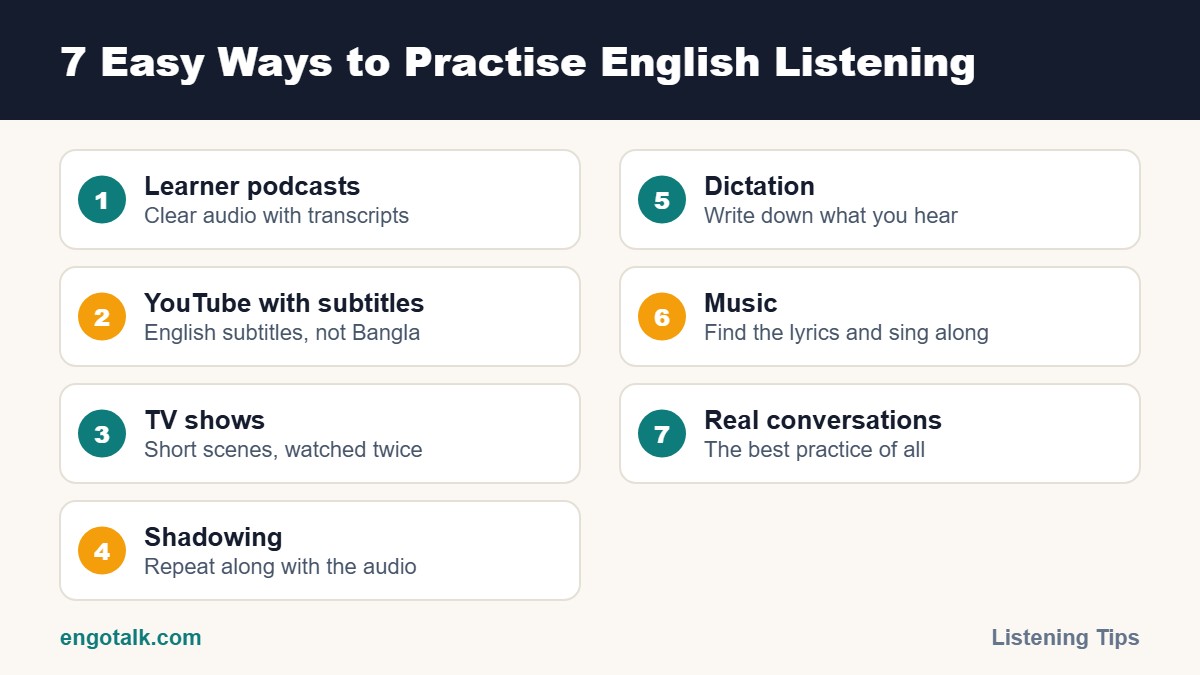
7 Easy Ways to Practise English Listening
1. Listen to podcasts for learners
Learner podcasts use clear voices and helpful explanations, and many include free transcripts. They are perfect for daily listening on the bus or while doing housework. See our list of the best free English podcasts.
2. Watch YouTube videos with English subtitles
Choose videos about topics you enjoy: cooking, technology, football or travel. Use English subtitles, not your native language ones, so you connect sounds with words.
3. Learn from TV shows and films
Watch short scenes twice: once with English subtitles, once without. Note useful phrases. Read our full method for learning English with movies and TV shows.
4. Try shadowing
Repeat what you hear along with the speaker. Shadowing improves listening and pronunciation together. Follow our shadowing technique guide.
5. Practise dictation
Play a short sentence, pause, and write exactly what you heard. Then check the transcript. Dictation shows you which sounds and words you are missing, such as small words like "a", "the" and "to".
6. Listen to English music
Songs are fun and memorable. Look up the lyrics, listen while reading them, and then try to sing along. Choose slower songs with clear vocals at first.
7. Have real conversations
Recordings are useful, but real conversations train you to listen and respond at the same time, which is what you need in real life.
Choose the Right Level
Too easy: You understand everything. Good for relaxing, but you learn little.
Just right: You understand about 70–80%. This is where you learn the most.
Too hard: You understand less than half. You will feel frustrated.
If you are just starting, read our guide on how to improve English listening skills for beginners.
Active vs Passive Listening
Passive listening means having English playing in the background. It helps you get used to the sounds. Active listening means focusing fully, pausing, repeating and checking transcripts. You need both, but active listening gives faster results.
A Simple Weekly Listening Plan
Monday and Thursday: One learner podcast episode with transcript.
Tuesday and Friday: One TV show scene, watched twice.
Wednesday: 10 minutes of dictation.
Saturday: 15 minutes of shadowing.
Sunday: A real English conversation.
Struggling with speed? Read how to understand fast English speakers. Preparing for an exam? See our IELTS Listening tips.
Practise Listening in Real Conversations on EngoTalk
On EngoTalk, you can join live 1-on-1 video calls with peer learners and tutors from your browser. It is a simple, affordable way to practise real listening and speaking every week. Start practising now.
Frequently Asked Questions
How many minutes should I practise listening each day?
20–30 minutes a day is a good target, with at least 10 minutes of active listening.
Does background listening help?
It helps you get used to English sounds, but active listening improves your skills faster.
Should I use subtitles?
Use English subtitles to learn, then try watching without them once you understand most of the content.
Can music improve my English listening?
Yes, especially when you read the lyrics while listening and learn the phrases used in songs.
Test yourself: 5-question quiz
Check what you remember from this article. It takes about one minute, and you earn XP for completing it.