
Shadowing Technique for English Listening: Step-by-Step Guide
Shadowing is one of the most powerful techniques for improving English listening, pronunciation and fluency at the same time. It was popularised by language teachers and interpreters, and it is now used by learners around the world.
The idea is simple: you listen to a native speaker and repeat what they say almost at the same time, like a shadow following you. In this guide, you will learn what shadowing is, why it works, a step-by-step method, the best materials to use and common mistakes to avoid.
What Is Shadowing?
Shadowing means listening to English audio and speaking along with it, about one or two words behind the speaker. You copy the speed, rhythm, stress and intonation as closely as possible. It is different from "listen and repeat", because you don't wait until the sentence finishes.
Why Shadowing Works
Better listening: You must pay attention to every sound, including linked and reduced words.
Natural pronunciation: You copy real rhythm and intonation, not just single sounds.
Faster speaking: Your mouth gets used to natural English speed.
Less translation: There is no time to translate, so you start processing English directly.
How to Shadow: Step by Step
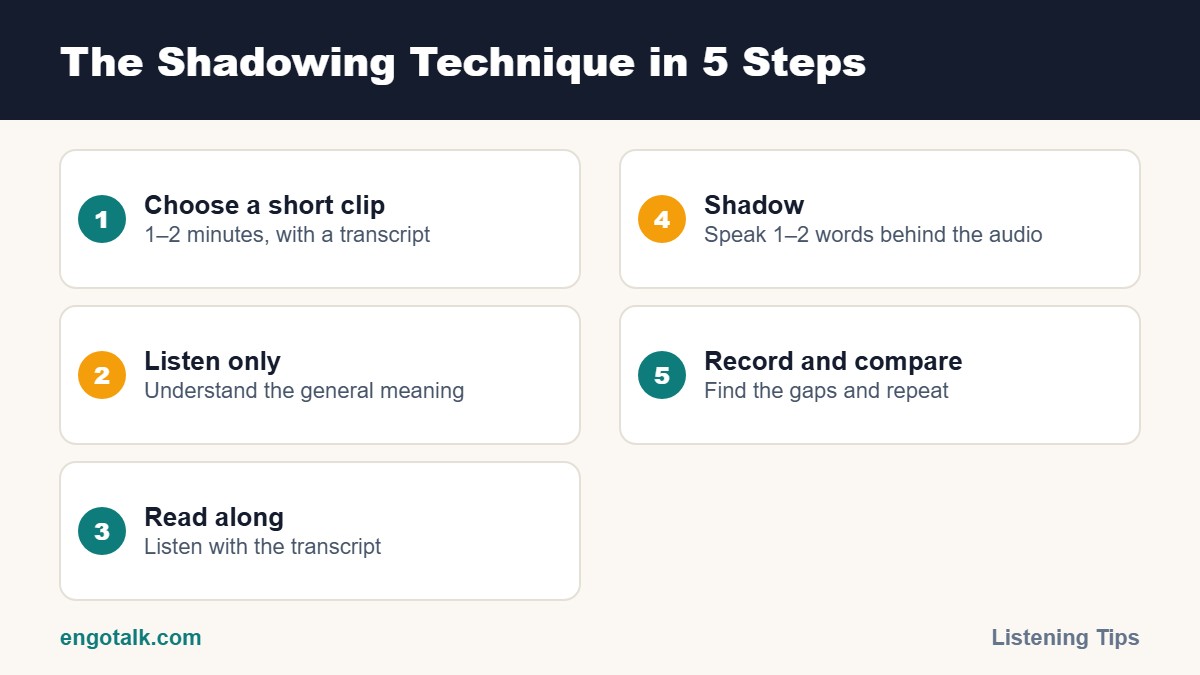
Step 1: Choose a short clip with a transcript
Choose 1–2 minutes of clear audio with a written transcript. Too long and you lose focus; too fast and you get frustrated.
Step 2: Listen without reading
Listen once or twice and try to understand the general meaning.
Step 3: Listen while reading the transcript
Read along to understand every word. Notice where words link together, which words are stressed and where the speaker pauses.
Step 4: Shadow with the transcript
Play the audio and speak along, just a little behind the speaker. Read the transcript if you need to. Repeat this three or four times.
Step 5: Shadow without the transcript
Now try without reading. Focus on copying the sounds and rhythm, not just the words.
Step 6: Record and compare
Record yourself shadowing and compare it with the original. Notice the differences and practise those parts again.
Best Materials for Shadowing
Learner podcasts: BBC Learning English "6 Minute English" and similar shows have clear audio and transcripts. See our list of free English podcasts for learners.
TED Talks: Interactive transcripts and many speaking speeds.
TV show scenes: Great for everyday conversational English. Read how to learn English with movies and TV shows.
Audiobooks: Listen while following the book text.
A 15-Minute Daily Shadowing Routine
3 minutes: Listen to the clip without the transcript.
3 minutes: Listen with the transcript.
6 minutes: Shadow 3–4 times.
3 minutes: Record yourself and compare.
Use the same clip for two or three days before moving to a new one. Repetition is where the real improvement happens.
Common Shadowing Mistakes
Choosing difficult audio: Start easy and build up.
Only reading, not listening: The goal is to copy sounds, not read text.
Speaking too quietly: Speak clearly and confidently, as if talking to someone.
Changing clips every day: Repeat the same clip to master it.
Giving up after a few days: Results usually appear after two to three weeks.
Shadowing is also excellent for pronunciation. Read our pronunciation tips for English learners, and if native speakers still feel too fast, see how to understand fast English speakers.
Use Your New Skills in Real Conversations
Shadowing prepares you for real conversations, but you also need to practise responding. On EngoTalk, you can talk with peer learners and tutors on live 1-on-1 video calls and put your listening and speaking skills to work. Start practising now.
Frequently Asked Questions
How long should I shadow each day?
10–15 minutes a day is enough if you practise consistently.
Is shadowing good for beginners?
Yes, if you use slow, clear audio with a transcript. Beginners can pause after each sentence at first.
How long before I see results?
Most learners notice clearer pronunciation and better listening after two to four weeks of daily practice.
What is the difference between shadowing and listen-and-repeat?
In listen-and-repeat, you wait until the sentence ends. In shadowing, you speak along with the audio, just slightly behind it.
Test yourself: 5-question quiz
Check what you remember from this article. It takes about one minute, and you earn XP for completing it.