How to Learn English with Movies and TV Shows: A Step-by-Step Method
Watching movies and TV shows is one of the most enjoyable ways to learn English. But many learners watch hours of Netflix or YouTube and still struggle to understand native speakers. Why? Because they watch for entertainment, not for learning.
In this guide, you will learn a simple step-by-step method to learn English with movies and TV shows, how to use subtitles the right way, which shows are best for your level, and how to turn what you hear into real speaking skills.
Why Movies and TV Shows Help You Learn English
Real, natural English: You hear how people actually speak, including slang, idioms and connected speech.
Context: Facial expressions and situations help you understand new words without a dictionary.
Different accents: British, American, Australian and more.
Motivation: When you enjoy the story, you keep watching, and consistency is the key to progress.
The Right Way to Use Subtitles
Subtitles can help or hurt your progress. Use them in stages:
subtitles in your native language: Only for complete beginners, and only for a short time.
English subtitles: The best option for most learners. You connect the sound of a word with its spelling.
No subtitles: Once you understand about 70–80% with English subtitles, try a second watch without them.
A powerful trick: watch a scene with English subtitles first, then watch the same scene again without subtitles.
A Step-by-Step Method to Learn English from a TV Show
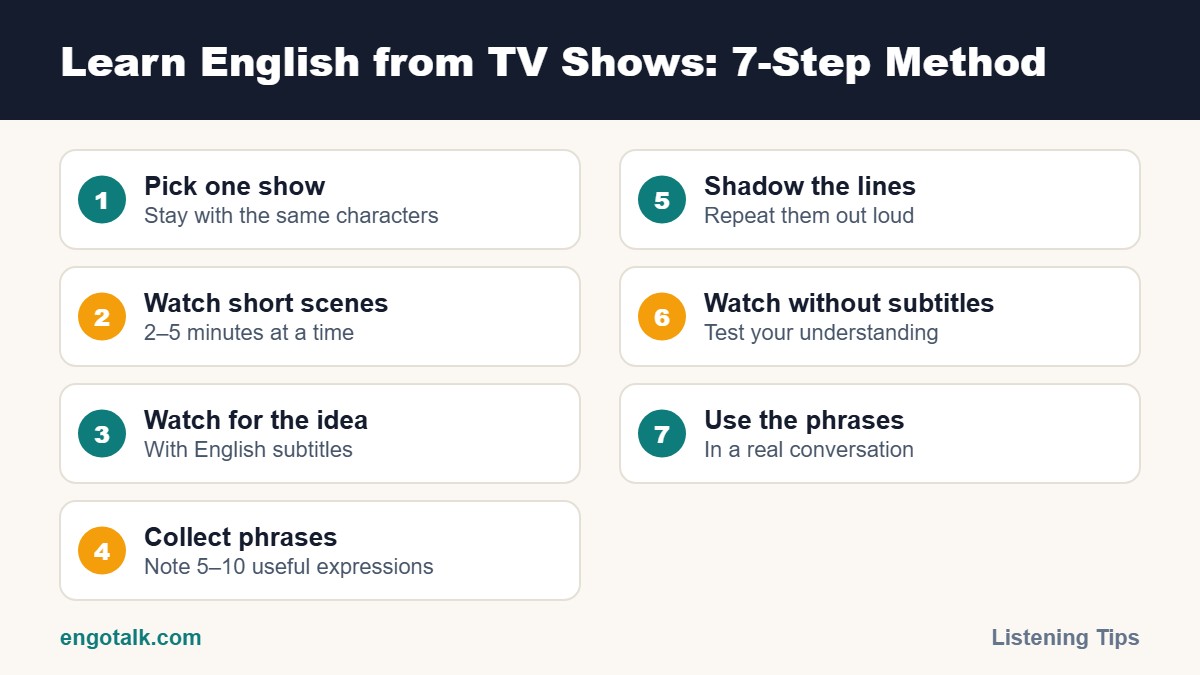
Step 1: Choose one show and stick with it
Watching the same characters every day helps you get used to their voices, accents and common phrases. Your understanding grows quickly.
Step 2: Watch short scenes, not full episodes
Pick a 2–5 minute scene. Short scenes let you focus fully instead of watching passively for an hour.
Step 3: Watch once for the general idea
Watch the scene with English subtitles. Don't stop. Just understand what is happening.
Step 4: Watch again and collect useful phrases
Pause and write down 5–10 useful expressions, not single difficult words. For example: "I'm running late", "What's going on?", "That makes sense".
Step 5: Shadow the lines
Pause after each line and repeat it out loud, copying the speed and emotion. This is called shadowing, and it improves both listening and pronunciation. Read our shadowing guide to learn more.
Step 6: Watch without subtitles
Watch the scene one last time with no subtitles. You will be surprised how much more you understand.
Step 7: Use the phrases in real conversation
New phrases only become yours when you use them. Try using 2–3 phrases from your notes in a real conversation the same week.
Best Movies and TV Shows for Learning English
For beginners
Peppa Pig and Bluey: Simple, clear British and Australian English with short episodes.
Extra English: A sitcom made specially for English learners.
For intermediate learners
Friends: Everyday American conversation, humour and very common expressions.
Modern Family: Family life, natural dialogue and clear speech.
The Good Place: Fun, clear and full of useful vocabulary.
For advanced learners
Sherlock: Fast British English and rich vocabulary.
The Crown: Formal British English.
Suits: Professional and business English.
Common Mistakes to Avoid
Watching passively for hours without pausing or noting anything
Always relying on subtitles in your native language
Choosing shows that are much too difficult for your level
Writing down every unknown word instead of useful phrases
Never practising speaking what you learned
If native speakers still feel too fast, read our tips on how to understand fast English speakers.
Turn Listening into Speaking with EngoTalk
Watching shows builds your listening, but speaking needs real conversation. On EngoTalk, you can practise the phrases you learn with peer learners and tutors on live 1-on-1 video calls. Even talking about your favourite show is great practice. Find a speaking partner now.
Frequently Asked Questions
Can I really learn English by watching movies?
Yes, especially listening and vocabulary. But you learn much faster when you watch actively and practise speaking what you hear.
Should I watch with English or subtitles in your native language?
English subtitles are best for most learners. Use subtitles in your native language only as a beginner, and move to English subtitles quickly.
How many minutes should I watch per day?
20–30 minutes of active watching is more effective than 2 hours of passive watching.
Is Friends good for learning English?
Yes. It uses everyday conversational English and very common phrases, which makes it popular with intermediate learners.
Test yourself: 5-question quiz
Check what you remember from this article. It takes about one minute, and you earn XP for completing it.