Master English Speaking Fast: 10 Daily Habits for Fluency
Many learners know a lot of English grammar and vocabulary, yet freeze when it is time to speak. Fluency is not about knowing more words. It is about how quickly and comfortably you can use the English you already know. And like any skill, it grows through daily habits, not occasional study.
In this guide, you will learn 10 simple daily habits that help you speak English more fluently, a practical daily routine, and the mistakes that slow most learners down.
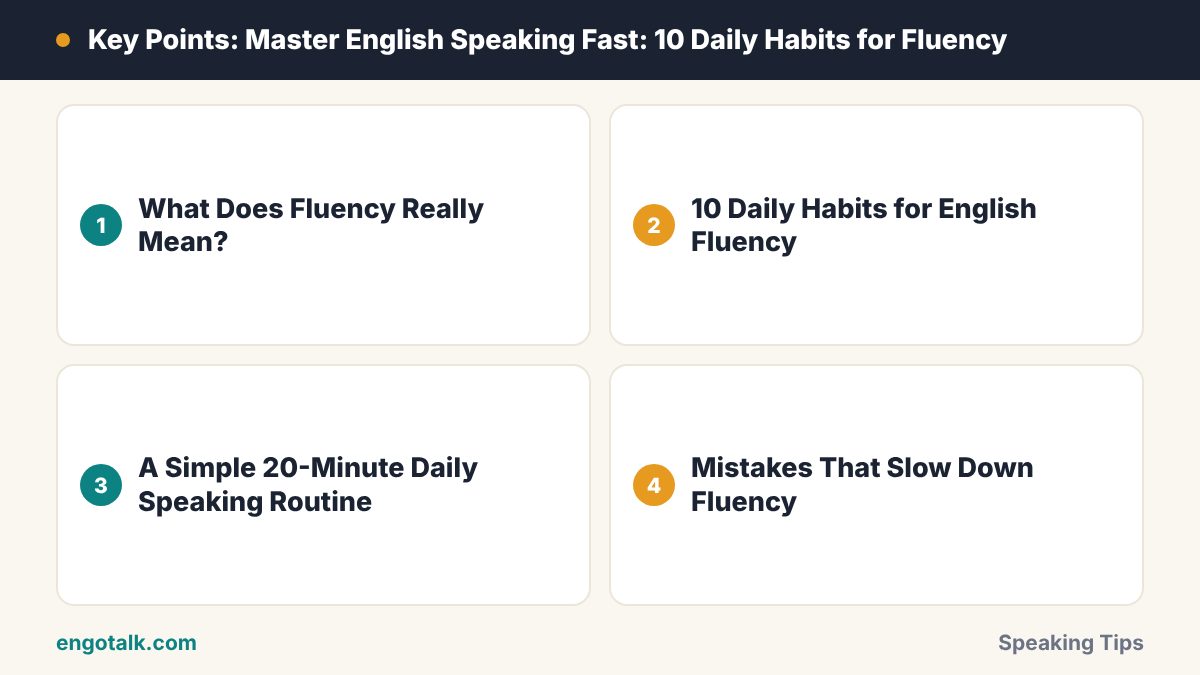
What Does Fluency Really Mean?
Fluency means speaking smoothly, without long pauses, and being easily understood. A fluent speaker can still make small mistakes. In fact, many fluent speakers have an accent and imperfect grammar. What matters most is that the conversation keeps flowing.
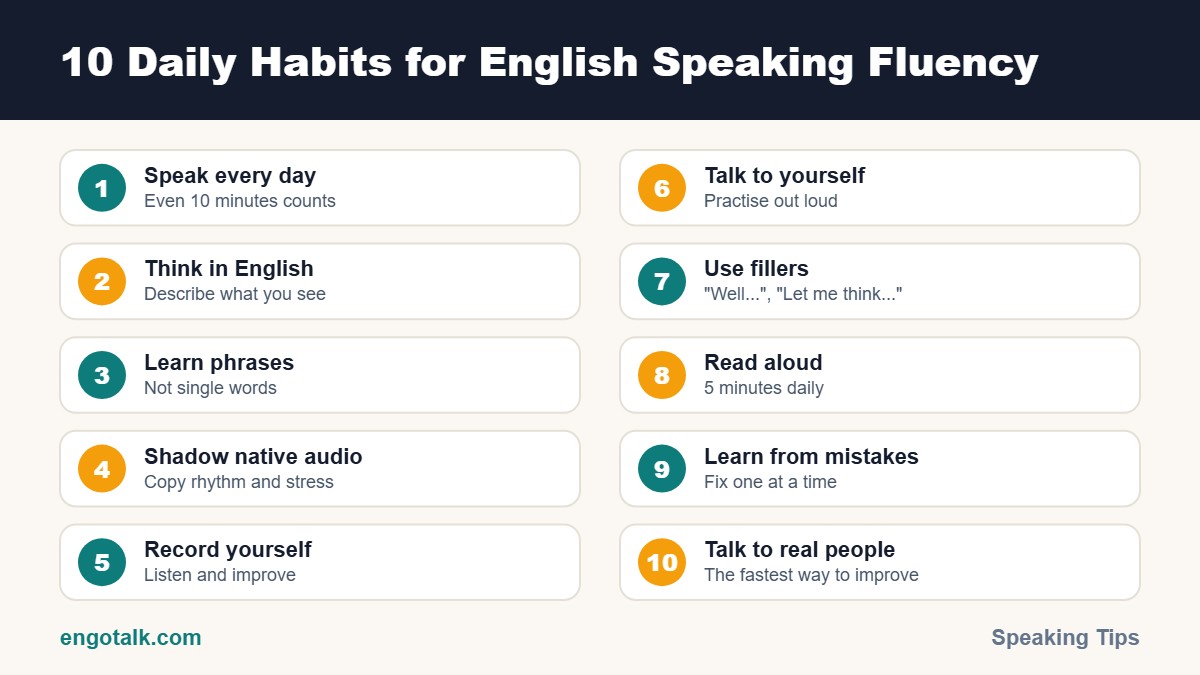
10 Daily Habits for English Fluency
1. Speak English every day
Even 10 minutes of speaking a day is better than two hours once a week. Your mouth and brain need regular practice.
2. Think in English
Describe what you see and do in English in your head: "I'm making tea. The water is boiling." This reduces translation time. Learn more in how to stop translating in your head.
3. Learn phrases, not just words
Fluent speakers use ready-made chunks like "to be honest", "it depends on" and "I'm not sure, but". Phrases help you speak faster because you don't build every sentence from zero.
4. Shadow native speakers
Repeat short audio clips along with the speaker to copy natural rhythm and speed. Follow our shadowing technique guide.
5. Record yourself
Record a one-minute answer to a simple question, like "What did you do last weekend?" Listen back and notice pauses, repeated words and mistakes.
6. Talk to yourself
Practise conversations alone: plan your day out loud or explain a news story. It may feel strange at first, but it works. Here are 10 ways to practise conversation without a partner.
7. Use natural fillers instead of silence
When you need time to think, use phrases like "Well...", "Let me think..." or "That's a good question." They keep the conversation flowing.
8. Read aloud for 5 minutes
Reading aloud trains your mouth muscles and improves pronunciation. Read our pronunciation tips for English learners.
9. Focus on one mistake at a time
Don't try to fix everything. Choose one common mistake each week, for example "he go" instead of "he goes", and focus on it.
10. Talk to real people regularly
Nothing replaces real conversation. Speaking with others teaches you to listen, respond and think quickly under real conditions.
A Simple 20-Minute Daily Speaking Routine
5 minutes: Shadow a short audio clip.
5 minutes: Read a short text aloud.
5 minutes: Record yourself answering one question.
5 minutes: Learn and use 3 new phrases in sentences.
Add two or three real conversations each week, and you will notice a clear difference within a month.
Mistakes That Slow Down Fluency
Waiting until your grammar is perfect before speaking
Translating every sentence from your native language
Memorising long word lists without using them
Only practising alone and never with people
Fear of mistakes: If this sounds like you, read how to overcome the fear of speaking English.
Build Speaking Fluency on EngoTalk
EngoTalk makes daily speaking practice easy. Match with a peer learner at your level on a live 1-on-1 video call in seconds, or book a tutor for guided practice. Start speaking now or see our pricing.
Frequently Asked Questions
How can I speak English fluently in a short time?
Speak every day, learn useful phrases, shadow native audio and have regular real conversations. Consistency is the key.
Can I become fluent without living abroad?
Yes. With online conversation practice and daily habits, many learners around the world become fluent without travelling.
Do I need perfect grammar to be fluent?
No. Fluency is about smooth, clear communication. Grammar improves naturally as you practise.
How many hours a day should I practise speaking?
20–30 minutes of focused daily practice, plus a few real conversations each week, is enough for steady progress.
Test yourself: 5-question quiz
Check what you remember from this article. It takes about one minute, and you earn XP for completing it.