Best English Story Books for Beginners: How to Pick Your Level
Reading stories is one of the most enjoyable ways to learn English. A good story keeps you turning pages, and while you enjoy it, you learn new words, grammar and natural expressions without feeling like you are studying.
The biggest mistake beginners make is choosing a book that is too difficult. In this guide, you will learn how to find your reading level, the best types of story books for beginners, specific book recommendations, and how to read a story in a way that improves your English.
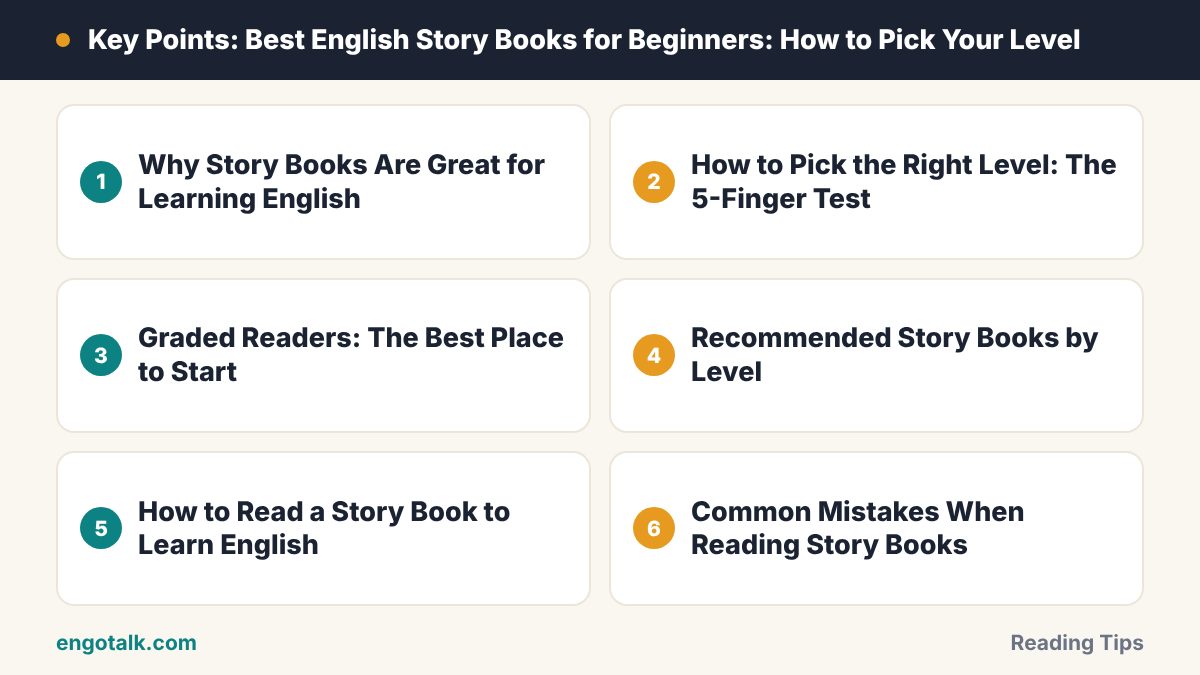
Why Story Books Are Great for Learning English
Context: Stories help you guess new words from the situation.
Repetition: The same words and phrases appear again and again.
Natural dialogue: You see how people really talk.
Motivation: You want to know what happens next, so you keep reading.
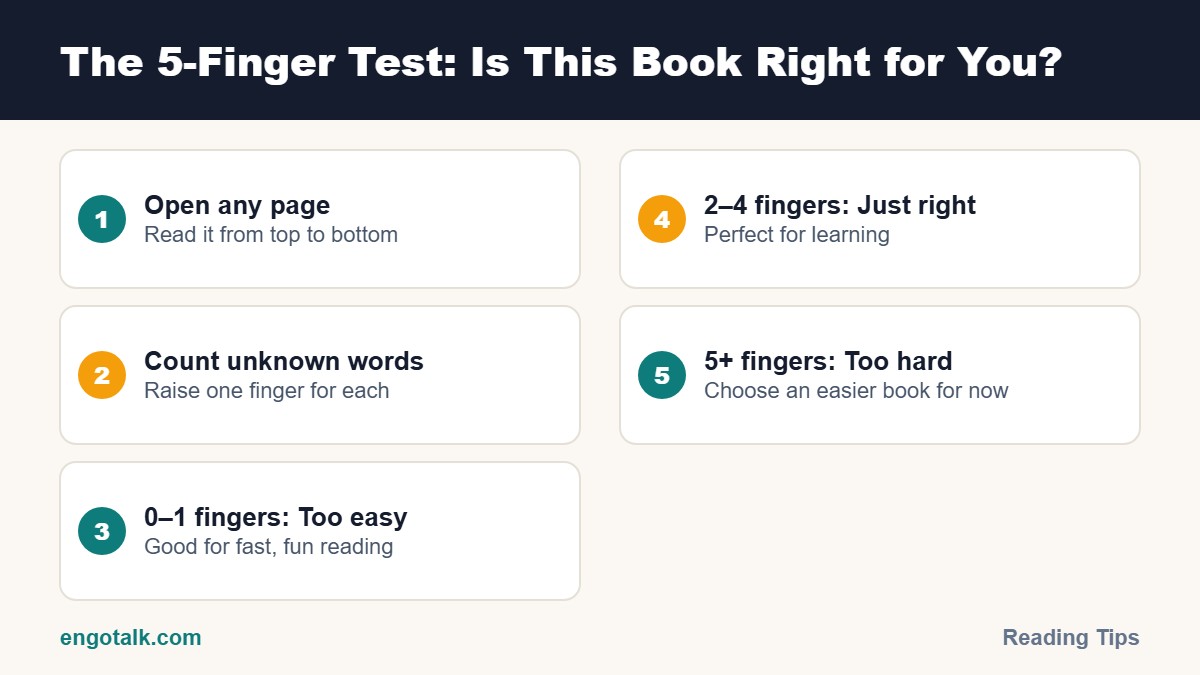
How to Pick the Right Level: The 5-Finger Test
Open the book to any page and read it. Raise one finger for every word you don't know.
0–1 fingers: Easy. Great for building speed and confidence.
2–4 fingers: Just right. You will learn new words without getting lost.
5 or more fingers: Too difficult for now. Save it for later.
Graded Readers: The Best Place to Start
Graded readers are books written or simplified for English learners. They use limited vocabulary at each level, so you can enjoy full stories even as a beginner. Popular series include:
Oxford Bookworms Library (levels from Starter to 6)
Penguin Readers (levels 1–7, including famous classics and modern stories)
Cambridge English Readers (original stories written for learners)
Most series show the level and the number of headwords on the cover. Start one level below what you think you need. Easy reading builds speed and confidence.
Recommended Story Books by Level
Beginner
Charlotte's Web by E.B. White: a warm, simple story about friendship.
The Little Prince (English translation): short chapters and simple sentences.
Graded readers at Starter–Level 2 of Oxford Bookworms or Penguin Readers.
Lower intermediate
Matilda and The BFG by Roald Dahl: funny, imaginative and easy to follow.
Diary of a Wimpy Kid by Jeff Kinney: everyday language with pictures.
Holes by Louis Sachar: an exciting mystery with clear writing.
Intermediate
Wonder by R.J. Palacio: short chapters and modern, natural English.
Harry Potter and the Philosopher's Stone by J.K. Rowling: popular and engaging, with some challenging words.
Animal Farm by George Orwell: short and powerful, good for discussion.
How to Read a Story Book to Learn English
Read for enjoyment first. Don't stop for every unknown word.
Read a chapter a day. Small daily reading builds a strong habit.
Note useful phrases, not just single words. Learn how in our guide to building vocabulary through reading.
Listen to the audiobook while reading. This improves pronunciation and listening too.
Retell each chapter in 2–3 sentences out loud.
For a structured daily routine, try the 20-minute reading method. When you are ready for real-world English, move on to reading English newspapers.
Common Mistakes When Reading Story Books
Choosing a book that is far too difficult
Translating every sentence into your native language
Stopping after a few pages because you looked up too many words
Reading only once a week
Share Your Favourite Stories on EngoTalk
Talking about a book you love is excellent speaking practice. On EngoTalk, you can tell a partner or tutor about your favourite story on a live 1-on-1 video call. Start a conversation.
Frequently Asked Questions
What is the best English story book for beginners?
Graded readers like Oxford Bookworms or Penguin Readers are best to start. For original books, try Charlotte's Web or Roald Dahl's stories.
How do I know if a book is too hard?
Use the 5-finger test. If you don't know five or more words on one page, choose an easier book.
Should I read with a dictionary?
Not all the time. Read for meaning first and check only a few important words.
Are audiobooks helpful?
Yes. Reading and listening together improves pronunciation, listening and reading speed.
Test yourself: 5-question quiz
Check what you remember from this article. It takes about one minute, and you earn XP for completing it.